INDIANAPOLIS (WISH) — Chronic pain is any pain that lasts longer than three months. It can also be inconsistent, a constant ache, or sudden flares.
The main problem in solving it is that there are many different causes, including arthritis, back pain, cancer, fibromyalgia, headaches, neck and nerve pain.
More than 50 million people in the U.S. live with chronic pain, a third of whom have had their entire lives stopped because of it.
“You get up with pain, you go to bed with pain. You don’t eat as well, you don’t move,” said Dr. Tom J. Smith, director of palliative medicine at Johns Hopkins Medicine.
The pain can shorten your life.
“People who got their pain relieved not only had much better pain control, but they lived three months longer than those who didn’t,” explained Smith.
According to the New York Times, pain has three neurological dimensions: the sensation you feel, how you understand it, and how you process the emotion.
A new study funded by the NIH at the University of California San Francisco is trying to solve the latter with deep brain stimulation, or DBS. So far, the FDA has only approved DBS for a few conditions including Parkinson’s and epilepsy.
“The novelty in this device is that not only does it stimulate, but it also senses and it senses brain waves,” said Okeanis Vaou, MD, associate professor of neurology at UT Health San Antonio.
In 2024, she used DBS to treat dystonia and saw great results there.
“It is relatively safe. The risks are very, very low, and it’s been around for decades,” Vaou stated.
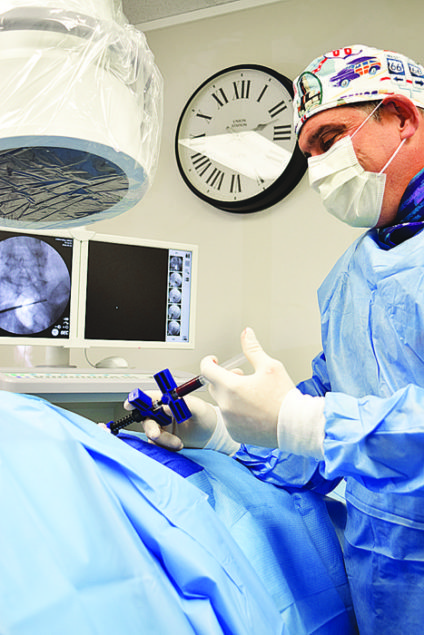
Surgeons implant the electrodes in the brain to read signals and stimulate different brain locations.
“It’s a more optimized therapy for them so they get better benefits from it,” explained Vaou.
The newest UCSF study uses DBS to treat chronic pain and found a 60% reduction in pain in the six participants. It’s still considered experimental but offers hope to many people suffering from chronic pain.
One of the authors of the UCSF study said that he hopes that the procedure will become as common as pacemakers, but for now, it is still invasive and expensive.